What's in the Stack? A Parent's Guide to Teen Sports Supplements
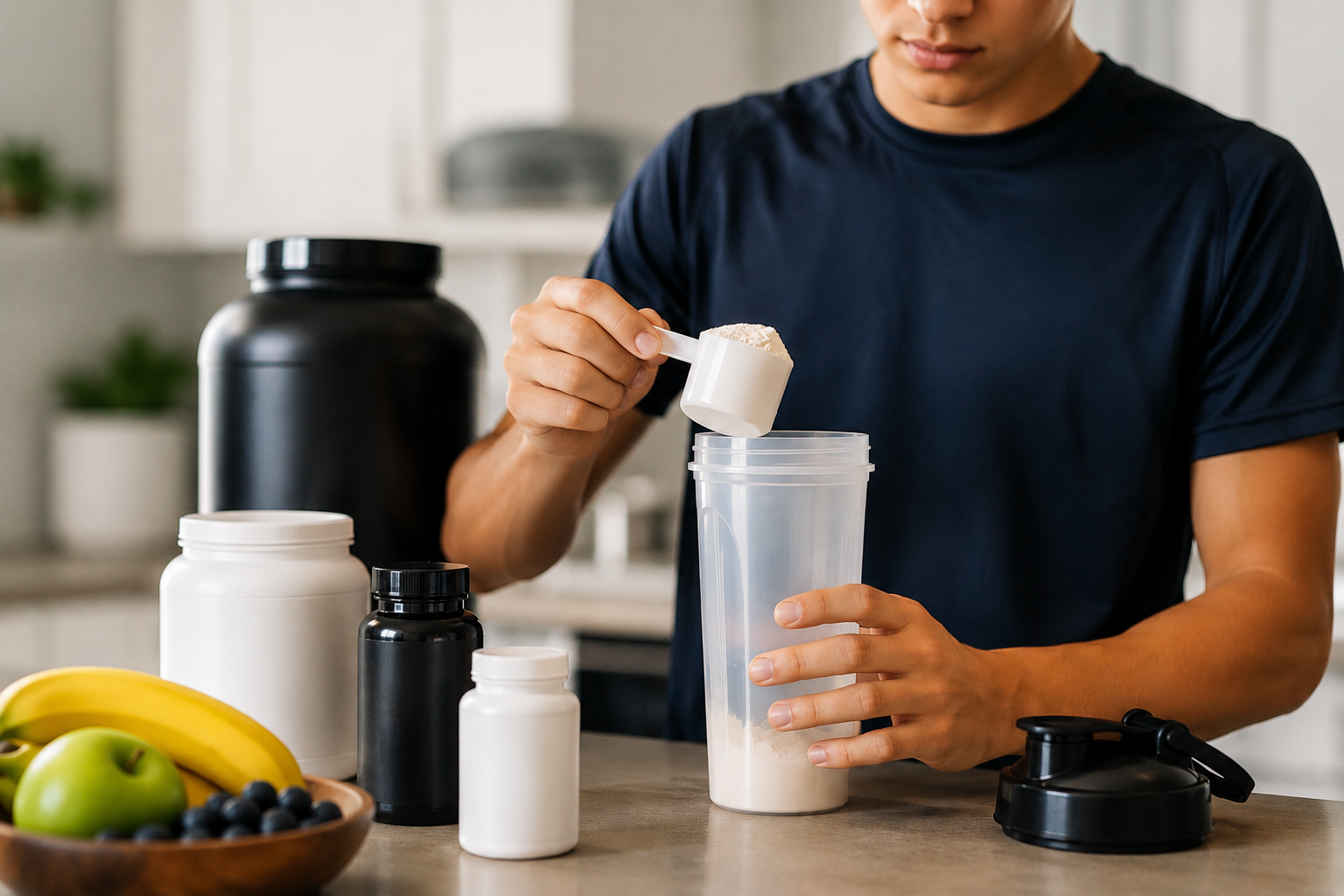
Your son comes home from practice and heads straight for the counter where he keeps his supplements. There's a protein tub, a pre-workout, maybe something labeled "focus" or "lean muscle support." He saw them on TikTok. His teammate uses them. They sound fine.
But do you actually know what's in them?
This isn't a post about throwing out everything in the cabinet. Most teen athletes don't need to avoid supplements entirely, and some products are genuinely low-risk. The goal here is to help you understand what's actually in common sports nutrition products, which ingredients deserve a closer look, and what symptoms might tell you something isn't sitting right. That information rarely comes with the product.
TikTok and the Supplement Industry
Supplements are not regulated the way medications are. A company does not need to prove a product is safe or effective before selling it. What ends up on the label is largely self-reported, including the doses, the ingredient names, and the claimed benefits. This matters especially for products marketed to athletes, where proprietary blends can list ingredients without specifying how much of each one is included.
TikTok fitness content has become one of the primary ways teens learn about supplements. Creators who look fit and perform well are credible in the eyes of a 16-year-old, regardless of whether they have any nutrition training or are being paid to promote a product. The supplement industry surpassed $68 billion in US sales in 2023, and a meaningful slice of that marketing targets teen athletes.
Knowing what's in the stack and what those ingredients actually do is the starting point for making informed decisions.
Protein: How Much Is Enough, and When Does More Become a Problem?
Protein is where most parents feel the least concerned, and for good reason. Dietary protein is not inherently dangerous, and teen athletes do have higher needs than their sedentary peers. The question is how much is actually needed and what happens when intake consistently exceeds that.
For adolescent athletes engaged in strength or endurance training, most sports nutrition guidelines support somewhere in the range of 1.2 to 1.7 grams of protein per kilogram of body weight per day. Researchers in the Journal for Pediatric Orthopaedic Society of America confirm these recommendations, writing: “Contrary to popular diets that encourage copious protein consumption, higher daily protein intakes, such as above >2.5 g/kg, provide no adaptive benefit.”
For a 150-pound (68 kg) athlete, 1.2 to 1.7g/kg works out to roughly 82 to 116 grams per day, an amount that is achievable through food alone for most teens eating regular meals.
The problem is that TikTok protein culture pushes much higher numbers, often framed as "more is always better for muscle." In practice, protein intake beyond what the body can use for muscle protein synthesis does not get stored as muscle. Excess protein is broken down and converted to glucose through a process called gluconeogenesis, which can contribute to elevated blood sugar over time, particularly in teens who are already consuming high-carbohydrate diets. What isn't used for energy is excreted, placing additional load on the kidneys. For teens with undiagnosed kidney conditions, consistently very high protein intake is worth taking seriously.
Protein powders carry some risks worth knowing about. Third-party testing, including work by the Clean Label Project, has repeatedly found heavy metals such as lead, arsenic, and cadmium in protein products at levels worth avoiding in a developing teenager. NSF's base certification (NSF/ANSI 173) tests for label accuracy and contaminants including heavy metals, pesticides, and microbial agents. NSF Certified for Sport adds a further layer specific to athletes, screening for substances banned by sports organizations, but it requires the base contaminant certification underneath it. Some brands go further still and test every lot for heavy metals. Thorne and Xymogen are two examples. The most reliable indicator is whether a company publishes Certificates of Analysis or will provide them on request.
Whole food protein sources such as eggs, Greek yogurt, chicken, cottage cheese, and legumes remain the most reliable option and do not carry the contamination risk of processed powders.
What About Creatine?
Creatine monohydrate is one of the most studied sports supplements in existence, and at a maintenance dose of 3 to 5 grams per day it is generally well-tolerated in healthy individuals. It supports rapid energy regeneration during short bursts of intense activity, and controlled research does not support the common concerns about kidney damage, dehydration, or muscle cramps. GI discomfort can occur but is mostly associated with large single doses rather than a standard daily amount.
Creatine is not a stimulant and does not act on the nervous system the way caffeine or tyrosine do. That said, a small number of case reports have noted mood changes at high loading doses and in individuals with underlying psychiatric conditions, so it is not entirely without caveats for susceptible teens. The high loading protocols promoted online, typically 20 grams per day for the first week, are not necessary and are the doses most associated with side effects. Product purity matters too, and a third-party certified product is worth seeking out for the same reasons as protein powder.
Pre-Workout Supplements
Pre-workout supplements are designed to increase energy, focus, and performance, and they do this primarily by loading the nervous system with stimulants. The most common active ingredient is caffeine, often at doses that exceed what is recommended for adults, let alone teenagers.
A standard cup of coffee contains roughly 80 to 100 mg of caffeine. Many pre-workout products contain 200 to 400 mg per serving, and some teens take more than one scoop. The American Academy of Pediatrics recommends that adolescents consume no more than 100 mg of caffeine per day. The gap between that recommendation and what is in a typical pre-workout is significant.
Why does this matter beyond the jitters? Published research shows that caffeine intake in adolescents is associated with increased irritability, decreased self-control, and in longitudinal data, a meaningful increase in self-reported aggressive behavior in the year following elevated consumption. Some of this appears to be mediated by sleep disruption. Caffeine taken before an afternoon or evening practice delays sleep onset and fragments sleep architecture, and the connection between poor sleep and emotional dysregulation in teenage boys is well established. A teen who is chronically under-slept and regularly dosing a stimulant-heavy product is starting from a compromised baseline every day.
Beyond caffeine, pre-workouts often contain other ingredients worth knowing about:
L-tyrosine is an amino acid included for focus and anti-fatigue effects. It is the direct precursor to dopamine and norepinephrine, the brain chemicals that drive motivation, stress response, and arousal. When these chemicals accumulate faster than the brain can clear them, the effect is not simply more energy or focus. In some boys it shows up as irritability, a shorter fuse, difficulty de-escalating from frustration, or outright aggression that feels out of proportion to the situation. Most people clear dopamine and norepinephrine efficiently, but a meaningful portion of the population carries genetic variants in genes called COMT and MAO-A that slow that clearance process. For those boys, repeated daily use of a product that keeps flooding the system with raw materials to make more of these chemicals can push arousal and reactivity well above their normal baseline. The connection between these variants and aggressive behavior is an emerging area of research rather than settled clinical guidance, but the mechanism is real and the variants are common enough to be worth knowing about.
Yohimbine shows up in pre-workouts and fat burners. It acts on the sympathetic nervous system and has been associated with anxiety, irritability, elevated heart rate, and in some cases manic episodes. It is not appropriate for teenagers. It also has documented interactions with a number of commonly prescribed psychiatric medications, including SNRIs like venlafaxine (Effexor) and tricyclic antidepressants, as well as MAOIs. If your teen is on any medication for depression, anxiety, or ADHD, yohimbine on a supplement label is a specific reason to check with their prescriber before use.
Methylated B vitamins are increasingly common in pre-workouts, nootropic blends, and general sports nutrition products marketed for energy and focus. They appear on labels as methylfolate, 5-MTHF, methyl-B12, methylcobalamin, or as part of broader "methyl support" complexes. For many people these forms are better absorbed than standard vitamins. The problem is that for individuals with certain genetic variants in genes like MTHFR, COMT, or MAO-A, high-dose methylated nutrients can push the methylation cycle into overdrive, overstimulating the nervous system in ways that show up as anxiety, panic, irritability, or in some cases significant rage. Boys who already carry slow-activity COMT or MAO-A variants may be particularly sensitive, since their dopamine and norepinephrine clearance is already compromised. If your teen is taking anything with "methyl" in the ingredient name and has developed unexplained mood changes or anxiety, the supplement is worth a closer look.
Beta-alanine is a performance ingredient that causes a harmless tingling sensation but is not associated with behavioral effects. It is one of the more benign pre-workout additions.
The broader issue with pre-workouts is that the combination of ingredients has not been studied in adolescents. When caffeine, tyrosine, and other stimulant compounds are stacked together and taken by a teen whose nervous system is still developing, the interaction is genuinely unknown.
Energy drinks deserve a mention here because they present the same concerns in a more socially normalized format. Products like Celsius, Alani Nu, and Prime Energy are widely used by teen athletes as a pre-workout substitute or during practice, and their caffeine content often equals or exceeds that of a dedicated pre-workout product. Because they are sold as beverages rather than supplements, they tend to feel less like something that needs scrutiny. The stimulant load, however, is the same.
Hormone-Adjacent Supplements: DHEA and Testosterone Boosters
Something worth understanding about testosterone-support products is that hormonal needs vary significantly across a man's lifespan. Some of these products are formulated specifically for older men whose testosterone levels are declining with age, and using them during adolescence is a fundamental mismatch. Others are marketed more broadly, without distinguishing between a 50-year-old and a 16-year-old. Either way, a supplement designed to push testosterone-related pathways upward in a man with declining levels is a very different intervention in a teenager whose testosterone is actively rising through normal puberty, and that distinction rarely appears in the marketing.
DHEA (dehydroepiandrosterone) is a hormone produced by the adrenal glands and a direct precursor to testosterone. It is legal to sell as a dietary supplement in the United States despite being a controlled substance in many other countries and banned by most sports organizations. Adolescence is already a period of active hormonal change, and the endocrine system is in a state of active calibration. Introducing androgen precursors during this window can disrupt that process in ways that are not fully reversible. Elevated androgen activity has also been associated with mood volatility and a lowered threshold for reactive aggression, which is not the same as anabolic steroid-induced "roid rage" but operates through overlapping biological pathways.
If you see products in your teen's cabinet that mention testosterone support, hormone optimization, or include DHEA on the ingredient label, that is worth a direct conversation.
What to Watch For
Knowing what is in the stack makes it possible to connect symptoms to potential causes. Here are things worth paying attention to:
Mood and behavior changes that appear or worsen after starting a new supplement, including increased irritability, a shorter fuse, difficulty regulating emotions, or uncharacteristic anger or aggression. In teen boys, these can be easy to attribute to adolescence, stress, or school. That may be true. But if the timeline correlates with a new product, it is worth noting.
Sleep disruption, including difficulty falling asleep, waking through the night, or waking unrefreshed. When a teen is chronically under-slept and taking daily stimulants, mood and behavior effects compound quickly.
Physical symptoms such as elevated resting heart rate, heart palpitations, shakiness, headaches, or GI distress connected to supplement use.
Escalating stack complexity. Starting with protein powder and gradually adding pre-workout, creatine, a fat burner, and a testosterone booster is a pattern that carries more combined risk than any single product and is very common in teen athletic culture.
A Practical Starting Point
If your teen is using supplements or asking about them, a few grounding questions are useful:
Is the diet actually supporting training? Most teen athletes are under-eating relative to their output, and no supplement corrects a foundation of inadequate food. Protein from whole foods, consistent carbohydrate intake around training, and adequate sleep will do more for performance and body composition than anything in a tub.
Does the product have third-party certification? NSF Certified for Sport and Informed Sport are the two most credible options for athletes. They test for label accuracy and banned substances and audit manufacturing practices, which meaningfully reduces risk, though they are not a comprehensive screen for every possible contaminant.
What is actually in it? Reading the ingredient label together, not just the front of the package, is a reasonable habit to build. If an ingredient is unfamiliar, that is worth a quick search before assuming it is benign.
Stay aware and keep the conversation open. Mood, sleep quality, energy, and behavior can all shift when a new supplement is introduced or a dose increases, and those changes are not always obvious right away. Teens are not always going to connect what they are taking to how they are feeling, and a gradual shift is easy for everyone to miss. Knowing what is in the stack gives you something concrete to point to if something seems off, and it makes it easier to have a productive conversation rather than one that feels like an accusation.
The information teens are getting on social media about supplements is rarely screened, rarely sourced, and rarely written with their age or biology in mind. Knowing what is actually in the stack is a reasonable place to start.
For more on sports supplements and mood: Could My Teen's Workout Supplements Be Causing Mood Changes?
© 2026 Ellie Whitenack, MS, Integrative Nutrition, LLC. All rights reserved.
This content is for educational purposes only and is not intended to diagnose, treat, or replace medical care.
Bella, Y. F., Cupido, S. R. S., Inacio, P. A. Q., Sobral, M. L. P., & Vieira, R. P. (2025). Pre-Workout Supplements and Their Effects on Cardiovascular Health: An Integrative Review. Journal of cardiovascular development and disease, 12(4), 112. https://doi.org/10.3390/jcdd12040112
Healthy Eating Research. Healthy Beverage Consumption Guidelines for Children and Adolescents. Consensus Statement. January 2025. healthyeatingresearch.org
Hecht, C., Bank, N., Cook, B., & Mistovich, R. J. (2024). Nutritional Recommendations for the Young Athlete. Journal of the Pediatric Orthopaedic Society of North America, 5(1), 599. https://doi.org/10.55275/JPOSNA-2023-599
Kristjansson, A. L., Kogan, S. M., James, J. E., & Sigfusdottir, I. D. (2021). Adolescent caffeine consumption and aggressive behavior: A longitudinal assessment. Substance abuse, 42(4), 450–453. https://doi.org/10.1080/08897077.2021.1876810
Longobardi, I., Solis, M. Y., Roschel, H., & Gualano, B. (2025). A short review of the most common safety concerns regarding creatine ingestion. Frontiers in nutrition, 12, 1682746. https://doi.org/10.3389/fnut.2025.1682746
Ostojic, S. M., Calleja, J., & Jourkesh, M. (2010). Effects of short-term dehydroepiandrosterone supplementation on body composition in young athletes. The Chinese journal of physiology, 53(1), 19–25. https://doi.org/10.4077/cjp.2010.amh090