Fueling the Teen Athlete
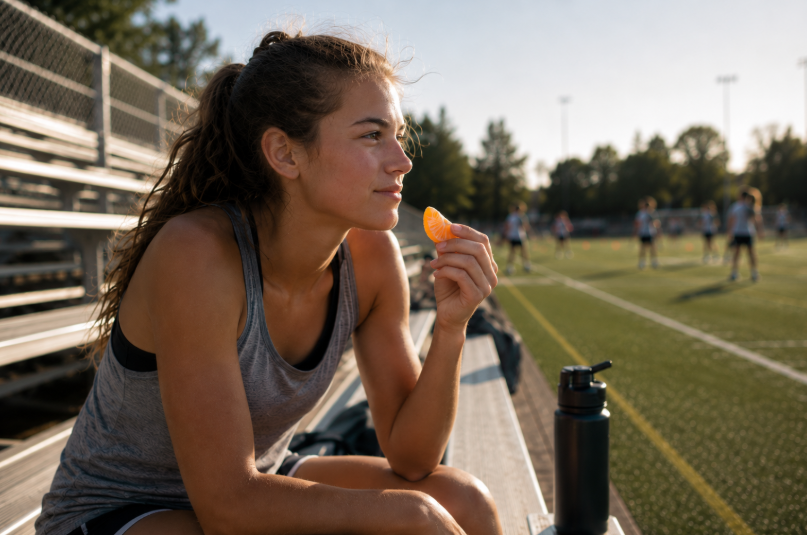
The supplement industry has done an effective job convincing teen athletes that performance comes from a tub. In reality, the most common nutritional problems in teen athletes are not gaps that supplements fill. They are gaps in the basics: calories, protein, water, and a handful of key micronutrients that are easy to miss and consistently overlooked.
Calories Are Foundational
The single most under-addressed nutritional issue in teen athletes is not protein or supplements. It is total caloric intake. Research consistently shows that adolescent athletes eat significantly less than they expend. One study of adolescent male soccer players found a daily caloric deficit of over 1,600 calories. Volleyball players consumed only 60% of their estimated energy needs. This pattern of under-fueling is common across sports and both sexes, and it has real consequences: slowed recovery, increased injury risk, impaired hormonal function, and reduced muscle development regardless of how much protein a teen is eating. Protein cannot build muscle efficiently if total energy intake is insufficient.
Total Daily Energy Expenditure, or TDEE, is the total number of calories a person burns in a day accounting for their basal metabolic rate, growth needs, and physical activity. For a teen athlete in active training, this number is substantially higher than most people assume, and higher than the 2,000-calorie figure that appears on nutrition labels. A 15-year-old boy playing competitive soccer five days a week may need 3,000 to 3,500 calories or more just to maintain energy balance. A TDEE calculator can help estimate this number based on age, weight, height, and activity level.
If a teen is tired, not recovering well between sessions, losing weight unintentionally, or stalling in performance despite consistent training, inadequate caloric intake should be the first thing to examine before considering any supplement.
Protein Targets
Protein is essential for muscle repair and development, and teen athletes do have higher needs than their sedentary peers. Most sports nutrition guidelines support somewhere in the range of 1.2 to 1.7 grams per kilogram of body weight per day. For a 150-pound (68 kg) athlete, that is roughly 82 to 116 grams per day, an amount that is achievable through food for most teens eating regular meals that include meat, dairy, eggs, or legumes.
Protein Targets based on 1.2-1.7g/kg recommendation
| Athlete Weight | Daily Protein |
| 100lbs | 54-77g |
| 125lbs | 68-97g |
| 150lbs | 82-116g |
| 175lbs | 95-134g |
| 200lbs | 109-154g |
Protein intake beyond what the body can utilize for muscle protein synthesis does not produce additional muscle. Excess protein is broken down and its nitrogen waste products cleared by the kidneys, and the glucose produced through this process can contribute to elevated blood sugar over time. More is not better, and the social media framing of protein targets of 200 or 300 grams per day for teen athletes is not supported by evidence.
Spreading protein across meals and including a protein-containing snack within a couple of hours after training supports better muscle protein synthesis than consuming the same total amount in one or two large meals.
What 100 grams of protein looks like in a day
Breakfast: 2 eggs and 1 cup Greek yogurt (32g)
Lunch: turkey sandwich with 3 oz deli turkey (18g)
Snack: 1 cup cottage cheese (24g)
Dinner: 6 oz salmon or ground beef (30-40g)
Total: approximately 108g
This does not account for smaller protein contributors like nuts, grains, and legumes.
A useful reference point: 3 oz of meat or fish is roughly the size of a deck of cards, and most teen athletes should be eating closer to two of those at dinner. For a teen eating regular meals with reasonable portions, protein supplementation is often unnecessary if food choices are thoughtful.
Hydration
A fluid loss of just 1 to 2% of body weight can meaningfully impair athletic performance, including reduced endurance, slower reaction time, and impaired thermoregulation. Thirst is not always a reliable early indicator in adolescents, particularly during intense exercise.
On training days, most teen athletes should be aiming for 2.5 to 3.5 liters of total fluid across the day. The higher end applies to larger athletes, hot weather, or high-intensity sessions.
General volume targets supported by sports nutrition guidelines:
Before activity: 16 to 24 ounces in the two hours before practice or competition, and another 8 to 16 ounces in the 10 to 20 minutes immediately before activity begins.
During activity: 6 to 12 ounces every 15 to 20 minutes throughout training. In sessions lasting longer than 60 to 90 minutes in heat, or on multi-session training days, a sports drink containing sodium and potassium is appropriate to replace electrolyte losses. For a typical 45-minute practice, water is sufficient.
After activity: Continue drinking consistently through the rest of the day to reach the daily target.
Urine color remains a useful daily guide. Pale yellow indicates adequate hydration. Dark yellow or amber before practice means the teen needs to drink before starting activity, not during it.
Iron: Particularly Important for Female Athletes
Iron deficiency is one of the most common nutritional problems in adolescent athletes and one of the most consequential. It impairs oxygen delivery to working muscles, reduces maximal aerobic capacity, and produces fatigue that is often attributed to overtraining or poor fitness rather than a nutritional gap. Studies in adolescent athletes have found iron deficiency rates ranging from 40 to over 50% in females and 15 to 40% in males, with female athletes consistently at higher risk due to menstrual losses combined with the increased iron demands of growth and training.
Critically, iron deficiency can impair performance before anemia develops. A teen with normal hemoglobin but low ferritin, a measure of stored iron, may still experience fatigue and reduced endurance. Ferritin is not always included in standard blood panels unless specifically requested, which is why it is worth asking for if a teen athlete is fatigued beyond what training load would explain.
Iron-rich foods include red meat, poultry, fish, legumes, and fortified cereals. Absorption is enhanced by consuming iron-containing foods alongside vitamin C and reduced by consuming them alongside calcium-rich foods or coffee. Athletes following vegetarian or vegan diets need to pay particular attention to iron intake since plant-based iron is absorbed less efficiently than heme iron from animal sources.
Iron supplementation should be based on confirmed deficiency from a blood test, not assumed. Excess iron is not harmless and should not be supplemented without clinical indication.
Vitamin D
Vitamin D deficiency is common in adolescent athletes, with prevalence estimates ranging from 48% in outdoor athletes to 80% in those who train primarily indoors or in northern latitudes during winter months. Vitamin D supports bone health, muscle function, and immune regulation, all relevant to a training athlete.
The standard recommendation for adolescents is 600 IU per day, though this is generally insufficient to maintain optimal levels in athletes. Standard lab ranges define sufficiency at 30 ng/mL or above, but many integrative and sports medicine clinicians aim for 50 to 80 ng/mL for athletes. Being in range at 32 ng/mL is not the same as being optimally supported. When levels fall below that window, supplementation in the range of 1,000 to 2,000 IU per day is appropriate and well-supported.
Supplements Worth Considering
Beyond addressing the fundamentals above, very few supplements have strong evidence in adolescent athletes. The short list of those that do:
Vitamin D, as discussed above, when confirmed deficient or insufficient and dietary sources are inadequate.
Iron, when confirmed deficient by blood testing. Supplementation under these circumstances has consistent evidence for restoring performance.
Creatine monohydrate at a maintenance dose of 3 to 5 grams per day has a well-established safety profile in healthy individuals and meaningful evidence for performance benefit in sports involving repeated high-intensity efforts. It is generally considered appropriate for post-pubertal athletes who are already eating and training well. It is not a substitute for the nutritional foundations covered above.
Magnesium is involved in over 300 enzymatic reactions including energy production, muscle contraction and relaxation, protein synthesis, and sleep regulation. Adolescent athletes are at particular risk of insufficiency because magnesium is lost through sweat, demand increases with exercise intensity, and dietary sources such as leafy greens, nuts, seeds, legumes, and whole grains are often under-consumed in typical teen diets. Low magnesium can contribute to muscle cramps, poor sleep quality, fatigue, and impaired recovery, all of which are easy to attribute to training load rather than a nutritional gap.
When supplementing, form matters. Magnesium oxide is poorly absorbed and commonly causes loose stools and cramping despite being widely available. Citrate is better absorbed but can have the same laxative effect at higher doses. Glycinate is well-tolerated, well-absorbed, and the preferred form for daily use, particularly when sleep support is a goal. A combination product including glycinate and malate is also a reasonable option. Typical doses for adolescents range from 100 to 300 mg per day, ideally taken in the evening.
Omega-3 fatty acids from fish oil support recovery and reduce exercise-induced inflammation, and are worth particular attention for contact sport athletes. DHA is a primary structural component of neuronal membranes, and adequate baseline omega-3 status supports brain tissue integrity and may buffer the neuroinflammatory response to head impact. In the post-concussion period, higher-dose omega-3 supplementation has emerging support for neurological recovery. Dosing in that context is worth discussing with a healthcare provider. For athletes not regularly eating fatty fish, daily supplementation is a low-risk, well-supported recommendation.
Everything else, including pre-workouts, testosterone boosters, fat burners, nootropic blends, and most proprietary sport formulas, lacks strong evidence for benefit in teen athletes and carries risks that are disproportionate to any plausible gain. The evidence base for most of these products in adult athletes is already modest. In adolescents, it is largely nonexistent.
Bottom Line
For most teen athletes, the highest-leverage nutritional interventions are the least glamorous ones. Eat enough. Prioritize carbohydrates around training for fuel and recovery. Include adequate protein across the day from whole food sources. Stay hydrated. Get iron and vitamin D levels checked if fatigue or performance seems unexplained. The foundation matters more than any supplement, and no supplement compensates for a foundation that is not in place.
© 2026 Ellie Whitenack, MS, Integrative Nutrition, LLC. All rights reserved.
This content is for educational purposes only and is not intended to diagnose, treat, or replace medical care.